
The real cost of twins in Australia: the 5x problem
Twins hit the baby-cost problem twice at once. Here is where the money goes, and the one category twin parents can genuinely bring down.
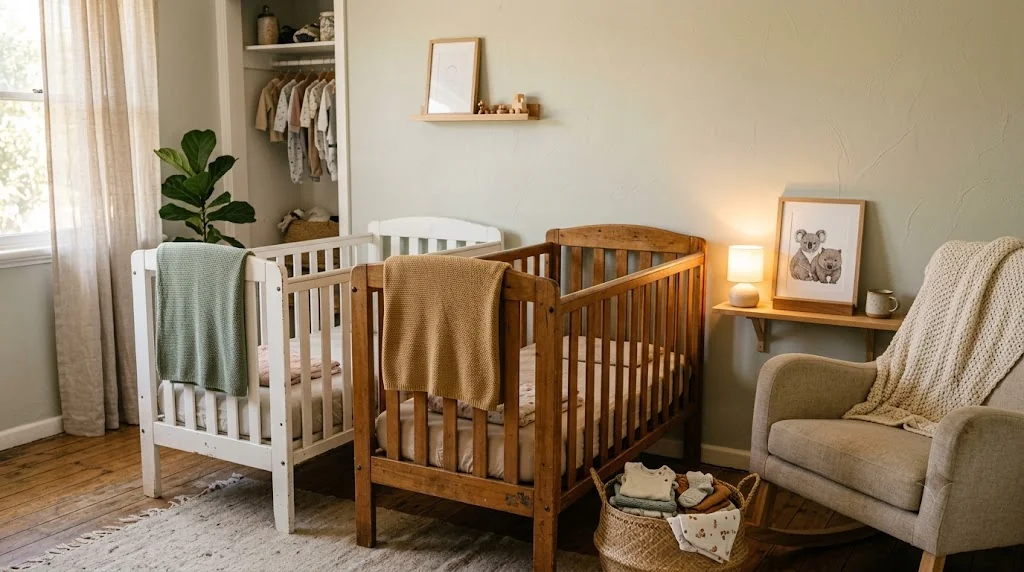
A small group, a doubled problem
Twins are a stable, sizeable part of Australian parenting. They account for roughly 2.9% of births, with 8,362 sets born in 2023, and about 98% of all multiple births are twins (AIHW). For those families, every part of the baby-cost problem arrives at the same moment, twice over.
That is the honest starting point. Twins do not cost double a single baby, because some spending is shared, but they cost a good deal more than double in the year that matters most, and the strain shows up early.
The five-times figure, in context
The most-cited number comes from research commissioned by the Australian Multiple Birth Association, the Multiples Matter report conducted by Per Capita in 2023. It found that twins cost roughly five times more than a single baby in the first year, which the report frames as about $13,000 more, excluding medical costs (AMBA, Multiples Matter).
Worth being clear about what this is. It is advocacy-commissioned research, not neutral government data, and it was produced to support the case for better multiple-birth family support. Treat the dollar figure as indicative rather than precise. Even read cautiously, though, it points the same way as everyday experience: the first year with twins is where the money concentrates.
The financial pressure is real and it lasts. A later AMBA survey found about 70% of multiple-birth families struggled financially in the first two years (AMBA, Good Start for Multiples). That is not a fringe of unlucky households. It is most of them.
Where the money goes
Two forces stack on top of each other. The first is the doubling problem: everything a baby needs one of, twins need two of. Two car seats and later two capsules. Two sleep spaces. Double the nappies, double the clothing across every size, and a specialist double pram that costs well above a single one. None of that halves just because the babies arrived together.
The second force is the fixed household costs that rise but cannot be shopped: a bigger home, and childcare for two. These are the largest lines and the ones you have least control over. You cannot negotiate your rent down because two babies arrived instead of one, and two childcare places are two childcare places. This is the part of the twin bill that simply is what it is.
The lever twin parents actually have
Look again at the doubled list. Clothes, prams, carriers, cots, toys. Those are exactly the durables that a child uses for a blink before outgrowing, and with twins you buy two of each, each worn for the same short window. It is the churn category, doubled.
That is also where second-hand does the most work. Buying these pieces pre-loved, then reselling them when your twins move past them, turns a doubled one-way cost into something closer to a rolling deposit. The doubling that makes twins expensive is the same doubling that makes reuse pay off twice. For a household already carrying the fixed costs it cannot move, the durables are the lever it can.
The reuse maths for twins
Two of each durable, each used for weeks not years, is twice the outlay and twice the resale. Buying the clothes, prams, carriers and toys pre-loved and passing them on halves the part of the twin bill you can actually reach, while the housing and childcare lines stay where they are.
References
The AMBA figures below are advocacy-commissioned research produced to support multiple-birth families, so treat the five-times and dollar figures as indicative rather than precise. The AIHW birth data is official.
- AIHW, Australia's mothers and babies: mothers who have multiple births (2023 data)
- Australian Multiple Birth Association, Multiples Matter report (Per Capita, 2023) (advocacy-commissioned research; the source of the five-times-cost and ~$13,000 first-year figures).
- Australian Multiple Birth Association, Good Start for Multiples (family financial-strain survey).
Related reading
Two of everything, for a fraction
Buy the clothes, prams and gear your twins outgrow in months pre-loved, then sell them on when you're done.
Shop the marketplace