
Buying two of everything: what twin parents actually need
You need two of some things and one of others. Here is what genuinely doubles for twins, and what the marketing quietly wants you to double.
The buy-two reflex
Find out you are having twins and a quiet arithmetic starts running in the background. Two cots, two prams, two of every gadget on the list. The reflex is understandable, and for a handful of things it is correct. For most of the list it is the marketing talking, not the babies. The useful question is not how much of everything to buy, but which items genuinely need to exist in duplicate.
The practical load with newborn twins is real. Healthdirect's guidance on raising and feeding twins describes the round-the-clock reality of two newborns who feed, sleep and need changing on overlapping schedules (Pregnancy, Birth and Baby). That reality decides what you truly need two of, and it is a shorter list than the shopping guides suggest.
Genuinely two of
Some things have to be doubled because two babies cannot safely share them at the same moment.
- Safe sleep spaces. Each baby needs their own clear, flat sleep surface, a cot or bassinet each, not a shared one.
- Car seats or capsules. One correctly fitted seat per baby, every trip, no exceptions.
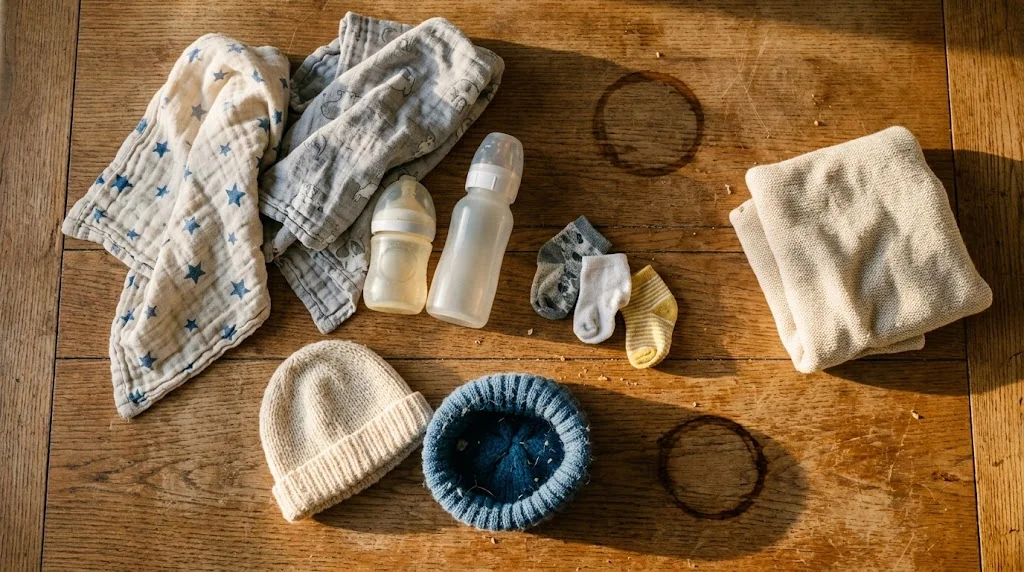
- Enough bottles, if you are bottle-feeding. Each newborn feeds roughly 8 to 12 times a day (Australian Multiple Birth Association), so two bottle-fed babies can get through somewhere around 8 to 16 bottles across half a day before anything is washed. A bigger set spares you the sink at 3am.
- Clothing in the size they are in now. Two babies wearing through the same size at once means twice the outfits, and newborns move through sizes fast.
Share just one
Plenty of the big-ticket items only get used one baby at a time, or serve both at once. A single change table does the job, since you change one baby at a time anyway. One baby bath is fine for the same reason. A double pram that carries both, tandem or side-by-side, replaces two singles. Most toys and books are shared without a second thought. A nappy bin serves the whole room, and one good monitor covers a shared nursery.
What the marketing oversells
The double reflex is where twin budgets quietly balloon. Wipe warmers you will unplug within a fortnight. A second nappy bin for a shared room. Two of every gadget that promised to help and mostly sat in a cupboard. Duplicate newborn-only items, the ones outgrown in a handful of weeks, bought twice at full price. None of these earn their second copy, and several barely earn a first.
Where the money case is strongest
Here is the twist that works in your favour. The items you genuinely need two of are mostly durables, cots, capsules, clothing in the current size, and each one is used for a short window before the babies grow past it. Buying two of something at full retail, only to store or discard it weeks later, is where the cost of twins bites hardest.
Which is exactly why pre-loved does the most work here. Buy the pairs second-hand, so doubling costs a fraction of buying two new. Share the singles, so you only buy one anyway. Borrow the newborn-only items that vanish from use in a month. When the babies move on, sell the pairs to the next twin family and recover part of what you spent. The things you were forced to buy twice become the things you resell twice.
Two of, one of, or borrow
Two of: sleep spaces, car seats, enough bottles, clothing in the current size.
One of: change table, baby bath, double pram, toys, nappy bin, monitor.
Borrow: the newborn-only gear that is outgrown in weeks.
References
Feed counts and daily loads vary by baby, so the figures above are for planning, not precise quotes.
Related reading
Double it for less
Buy the pairs your twins need pre-loved, share the singles, and sell it all on when they grow past it.
Shop the marketplace