
Why we built Lhoop
Two boys on the way, a wardrobe full of dresses too good to donate, and a marketplace that never worked for clothes.
The day everything changed
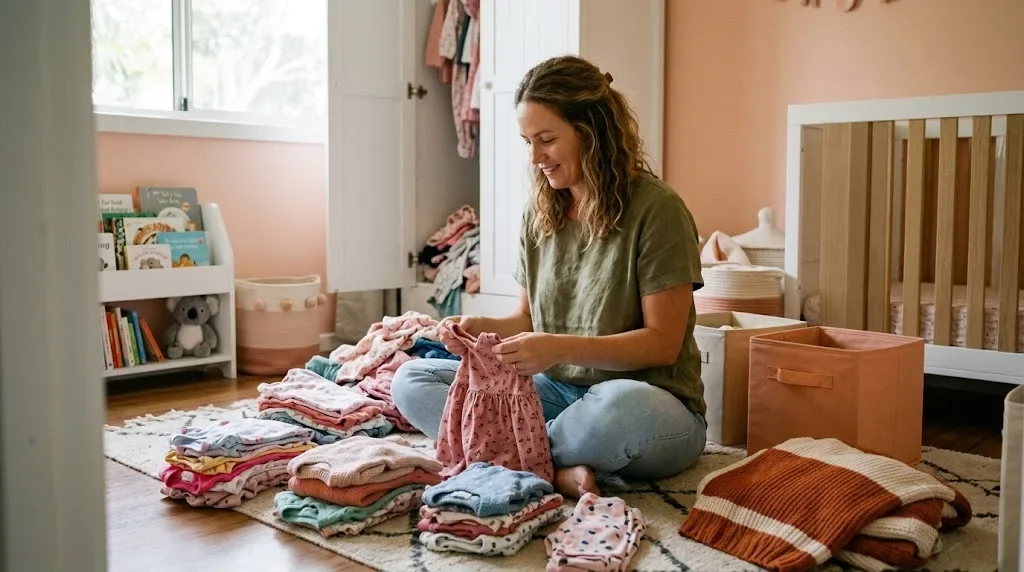
I cried at that ultrasound. Not the happy kind, at least not at first. We already had our daughter, and then there were two more heartbeats on the screen. Twin boys. Honestly, my first thought wasn't even about sleep or nappies. It was about the wardrobe.
Our daughter had a closet full of beautiful things. Pieces my mum had spoiled her with, dresses worn a handful of times, the good stuff you buy when it's your first. And in one appointment I realised none of it was coming back into rotation. We were starting a whole boys' wardrobe from scratch, times two.
The dresses I couldn't give away
Here's the thing about quality kids' clothes. You can't bring yourself to bin them, and donating a $60 dress for nothing feels wrong when you know exactly how much wear is left in it. But you also can't keep a wardrobe of dresses your three boys will never touch.
I wanted those pieces to go to another mum who'd love them, and I wanted something back so I could put it towards the mountain of boys' clothes we suddenly needed. That's it. That was the whole problem. It turns out there was nowhere good to do that.
Why Facebook Marketplace never worked
Like everyone, I tried Facebook Marketplace first. Free, local, everyone's on it. And like everyone, I spent weeks wanting to throw my phone across the room.
People would lock in a time and a place, then vanish. The same "is this still available?" landed twenty times with no follow-up. Strangers wanted to meet in car parks at night. There was no way to know who I was actually dealing with, no reviews, no protection if it went sideways. And the lowballing. A $40 bundle of barely-worn clothes met with "will you take $5?" over and over.
I was trying to claw back a bit of time and money with newborn twins at home, and the thing meant to help was eating both. Most weeks I gave up and put another bag in the donation bin, not because I wanted to, but because selling was too much.
Nothing else fit either
So I looked everywhere else. Vinted and Depop are lovely if you're into fashion and you've got the time to build a following. I had neither. I had bin bags of outgrown clothes and about four minutes a day to myself.
The big overseas platforms weren't built for us, with shipping maths that never made sense from Australia. And none of them were built for parents. Kids' clothes were buried in with sneakers and vintage finds, with no real way to know you were dealing with another mum who got it.
So we built it ourselves
Every mum I spoke to had the same story. The ghosting, the lowballing, the good clothes donated for nothing because selling them was a second job. So we built the thing we wished existed, around a few simple ideas.
- A community of parents, not strangers.You're selling to and buying from other mums and dads, not anonymous accounts in a car park.
- No seller fees.Price something at $20 and you keep $20. We add a small fee on the buyer's side for protection, and that's it.
- Listing that takes seconds.Snap a few photos and we draft the description, brand, size and a fair price for you, so clearing out a whole drawer doesn't cost you an evening.
- Money that's actually safe.Payment is held until the buyer has their parcel. No cash, no meetups, no "sorry, changed my mind" once you've posted.
- Built for Australia. Real Australia Post shipping, sane for our distances, with postage covered in your payout when you send.
Where we're taking it
We're only at the start. The dream is local lhoops, little pockets of parents in the same suburb or school catchment who can pass things along close to home. Sell Australia-wide through the app, but hand a bundle over around the corner when someone's nearby.
Good clothes staying in good homes, kept moving from one family to the next. That's the whole point of the name.
Come in
If you've ever stood over a donation bin with a perfectly good dress in your hand, knowing it deserved better, Lhoop is for you. We built it because we needed it. Really glad you're here.
Related reading
Have a look around
Browse what other mums are passing on, or list your first piece in under a minute.
Shop the marketplaceLaura (and Seb, who actually built this thing)