
What to do with outgrown baby clothes
Sell, hand down, donate or recycle. A practical way to decide which pile each piece belongs in, without the guilt.
The short version
The cupboard every parent has
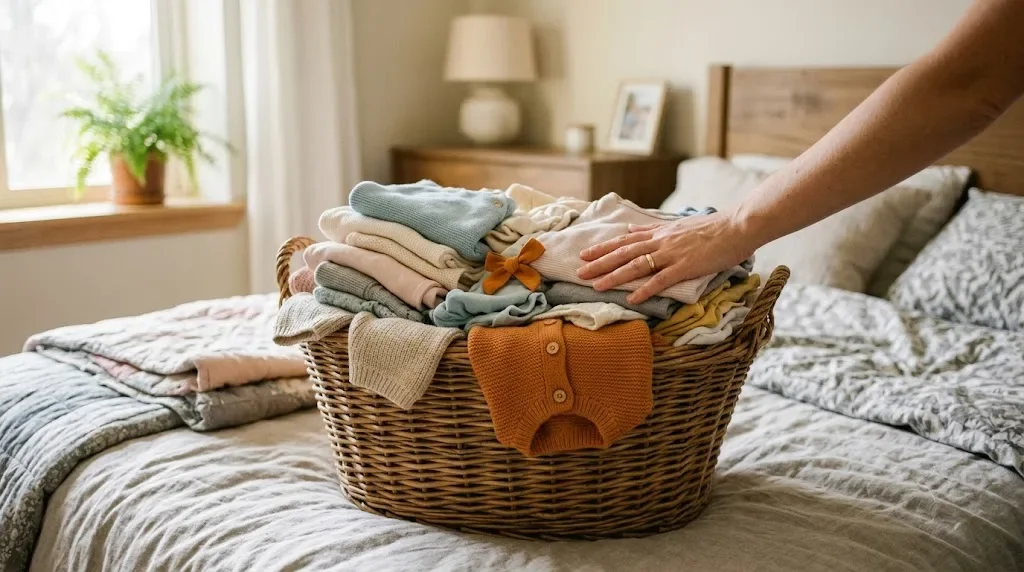
Babies grow through roughly seven sizes in their first two years. Most of those clothes get worn for a couple of months, some only once or twice, and a few never make it out of the wrapping. So the cupboard fills with things that are too good to bin and too nice to give away for nothing, and the pile quietly becomes a job you keep postponing.
The trick is that "what do I do with all this?" is actually four smaller questions, and each one has an easy answer once the sorting is done.
Sort into four piles first
Put a podcast on, tip the cupboard onto the bed, and sort everything into four piles. Don't overthink any single piece; ten seconds each is plenty.
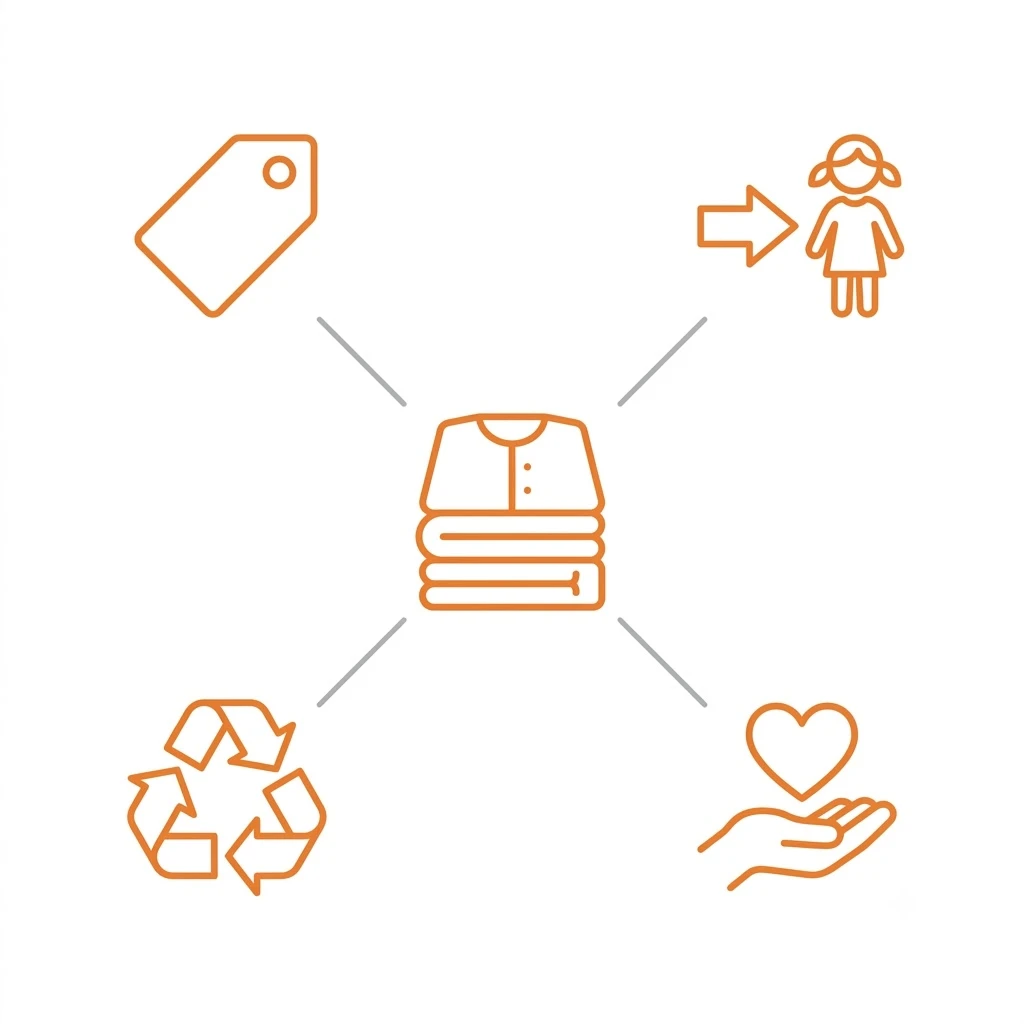
- Sell: barely worn, well-known brand, or anything you'd happily buy secondhand yourself.
- Hand down: pieces you want to see on a particular little person you know.
- Donate: clean, wearable everyday basics without a resale story.
- Recycle: stained, stretched, missing buttons, broken zips.
A fifth, small pile is allowed: the keepsakes. More on that below, the key word being small.
Sell the good stuff
This is the pile most parents get wrong, usually by donating it. A barely-worn dress that cost $60 is worth real money to another mum, and giving it away for nothing is why selling exists as an option at all. Quality baby clothes typically resell for 30-50% of what they cost new, and better brands hold more.
What earns its place in the sell pile:
- New with tags. Gifts in the wrong size, the over-buys, the "grew too fast" pieces.
- Brand names. Bonds, Country Road, Purebaby and the like sell quickly and hold value.
- Occasion wear. Christening outfits, party dresses, worn twice at most.
- Size lots. A bundle of one size sells better than the pieces would separately, one parcel and done.
Where to sell is its own topic, and we've written a full guide to selling kids' clothes in Australia. The short version: Facebook Marketplace works if you can face the meetups and the ghosting, and Lhoopis what we built so you don't have to. No seller fees, photos to published listing in under a minute, payment held safely until the buyer has the parcel.
Hand down the favourites
Some clothes aren't about money. The jumper your mum knitted, the outfit from the newborn photos, the dinosaur tee that got worn three days a week. If there's a cousin, a neighbour or a best friend's bub coming up behind, hand-me-downs are the happiest ending a piece of clothing can have.
Two things make hand-me-downs work better:
- Pass on whole sizes, washed and sorted. A labelled tub of "size 0, winter" is a gift; a garbage bag of everything is a chore.
- Say the quiet part. "Keep, pass on or donate whatever you don't use, no need to return anything." It frees both of you.
Donate the everyday pieces
Everyday basics in good condition, the plain onesies and daycare trackies, are exactly what op shops and local baby-goods charities need. Vinnies, Salvos and Lifeline stores take clean baby clothing, and many areas also have charities that pass baby essentials directly to families doing it tough, which is about as good a second life as clothes get.
One rule keeps donating honest: donate only what someone could put on a child tomorrow.Washed, intact, weather-appropriate. Charities spend real money disposing of unusable donations, so the stained and broken things belong in the recycle pile, not the charity bin. And check the label on sleepwear and swimwear elastics; if it's tired, it's a rag.
Recycle the worn-out rest
The stained, the stretched, the mystery-mark survivors of daycare. They're not sellable and they're not donatable, but they don't have to be landfill either.
- Textile recycling. A growing number of councils and clothing retailers run textile take-back programs; a quick search for your area will turn up the closest drop-off.
- The rag bag. Cotton onesies are genuinely good cleaning cloths. A small stack pays for itself.
- Animal shelters. Many accept soft, clean textiles as bedding; ring ahead and ask.
What to keep
If another baby is on the cards, keep the neutral basics and the expensive seasonal gear in labelled tubs by size. Future you will be grateful, and storage is cheaper than re-buying size 000 everything.
For keepsakes, give yourself one box, an actual box with a lid, not a shelf. The coming-home outfit, the first birthday top, one or two pieces that undo you a little when you hold them. When the box is full, something has to earn its place. It sounds strict; it's the only thing that works.
The one-minute decision test
For any piece you're stuck on, ask these in order and stop at the first yes:
Would I pay real money for this secondhand? Then someone else will too. Sell it.
Is there a specific child I want to see wearing it? Hand it down, in a sorted tub.
Could a stranger put it on their child tomorrow? Donate it, washed and folded.
None of the above? Textile recycling or the rag bag, guilt-free.
That's the whole system. One afternoon, four piles, and the cupboard goes back to holding clothes that actually fit.
References
Further reading on where Australia's clothing ends up, and why keeping it in use matters.
Related reading
Got a sell pile ready to go?
Snap a few photos and Lhoop drafts the listing for you. No seller fees, so the price you set is what you keep.
Start selling on Lhoop